
Air balancing vs water balancing is the basic split inside commercial TAB. Specifically, air balancing vs water balancing means two distinct trades — air-side covers diffusers, grilles, VAV boxes, and AHUs; water-side covers coils, pumps, and balancing valves. Both follow ASHRAE 111. Most commercial closeouts need both. The air balancing vs water balancing decision is rarely either/or — it’s usually both, coordinated.
Air balancing and water balancing are two separate trades within the TAB family. They use different instruments, follow different procedural sub-sections within ASHRAE 111, and produce different report sections. Most commercial buildings need both.
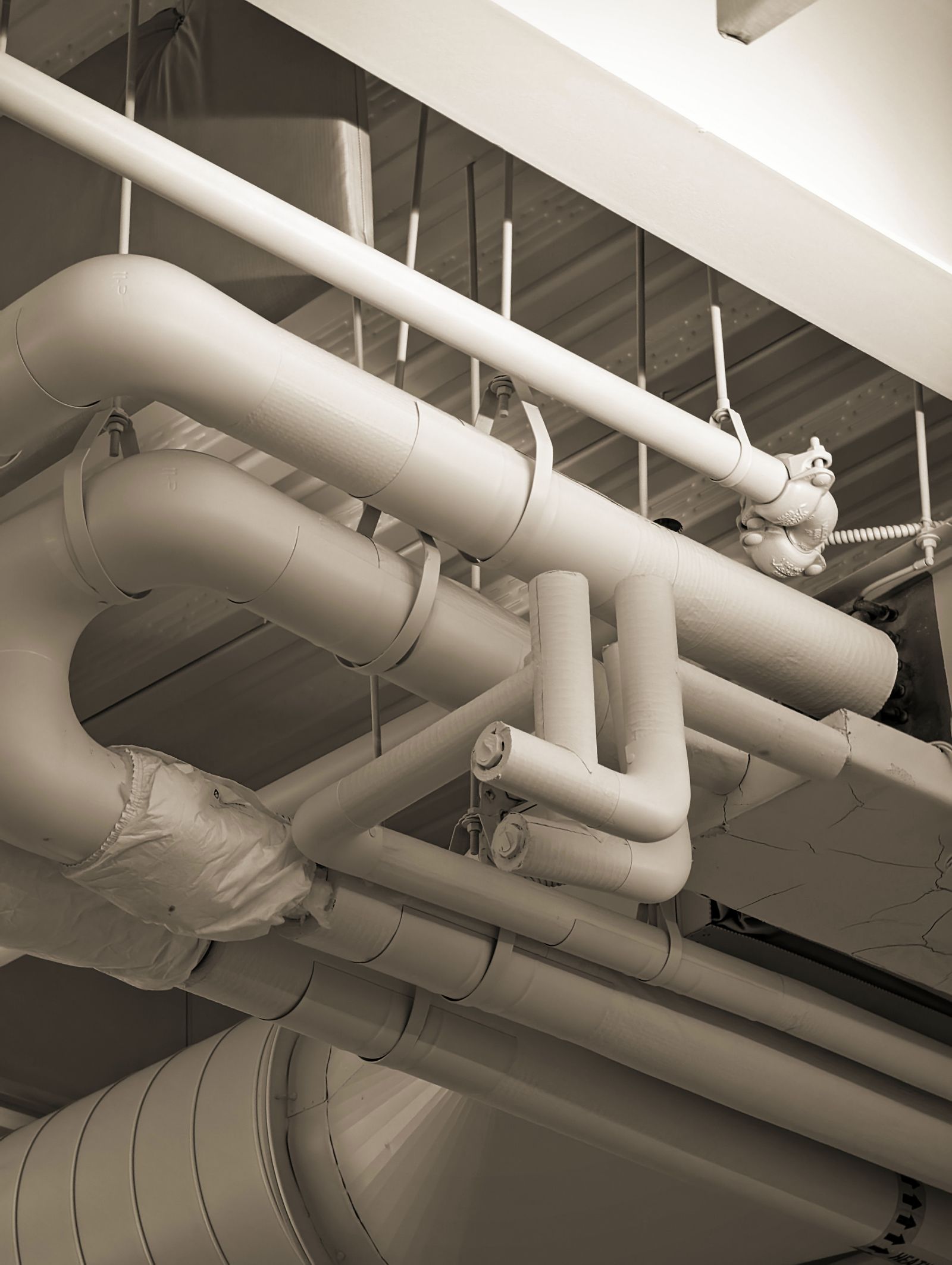
Air balancing vs water balancing — what each trade verifies
First, air balancing vs water balancing is the basic split inside commercial TAB. Specifically, air balancing covers every diffuser, return grille, VAV box, and AHU on the air-side. Then water balancing covers every coil, pump, and balancing valve on the hydronic side. Furthermore, both trades follow ASHRAE Standard 111.
Air balancing vs water balancing — where the trades overlap
Additionally, air balancing vs water balancing overlap at the coil. Therefore, an air-side reading is meaningless if the water-side flow is wrong, and vice versa. Specifically, our crews coordinate air-side and water-side measurements on the same coil to avoid chasing tail.
Air balancing vs water balancing — what owners receive
Furthermore, the deliverables stay distinct. The air balancing report covers every diffuser CFM and AHU performance. The water balancing report covers every coil GPM and pump curve. Therefore, owners receive two coordinated documents that together prove ASHRAE 111 compliance across the whole system.
How the two trades coordinate on closeout
On a typical commercial new construction closeout, the mechanical contractor confirms substantial complete on a Friday; the TAB crew mobilizes the following Monday. Air-side measurements run first while pumps are still in the start-up phase. Water-side measurements follow as soon as the hydronic loops are filled, vented, and treated. Coordination matters at the coil — an air-side reading on a coil with the wrong water flow is wasted effort. Crews communicate directly during the punch phase; the engineer’s closeout walk usually happens after both reports land. Most projects close out within 4-6 weeks of substantial complete.
Frequently asked questions
Is air balancing vs water balancing always a separate scope?
Most commercial closeouts engage both as a combined TAB scope. Air balancing vs water balancing is a procedural distinction, not usually a procurement distinction.
Which costs more — air balancing vs water balancing?
Usually air balancing, because device count is higher. Air balancing vs water balancing on a typical commercial building runs roughly 65/35 air-side / water-side.
Can air balancing vs water balancing be done by the same crew?
Yes, when the firm holds NEBB or AABC certification for both. Our crews handle air balancing vs water balancing on the same engagement.
How the engineer specifies the scope
Section 23 05 93 of the standard CSI MasterFormat covers HVAC testing, adjusting, and balancing. The engineer writes the project specification by referencing ASHRAE Standard 111 and naming the required certification body (NEBB, AABC, or TABB). The spec typically lists every system to be measured, the required deliverables, and the punch-list cycle expectations. Reading the spec line by line is part of every proposal we draft — what’s in the spec defines the scope, and what’s missing from the spec often defines the scope creep. Smart owners insist on a spec walk before bid lock.
Related reading
Want the full picture? See our pillar page on hydronic & water balancing service.