
TAB services for commercial buildings cover air-side balancing, hydronic water balancing, duct leakage testing, HVAC commissioning, sound and vibration, IAQ, and stairwell pressurization. Our TAB services follow ASHRAE Standard 111 with NEBB or AABC certification stamps as required. Every TAB services engagement closes with a stamped report delivered to the owner.
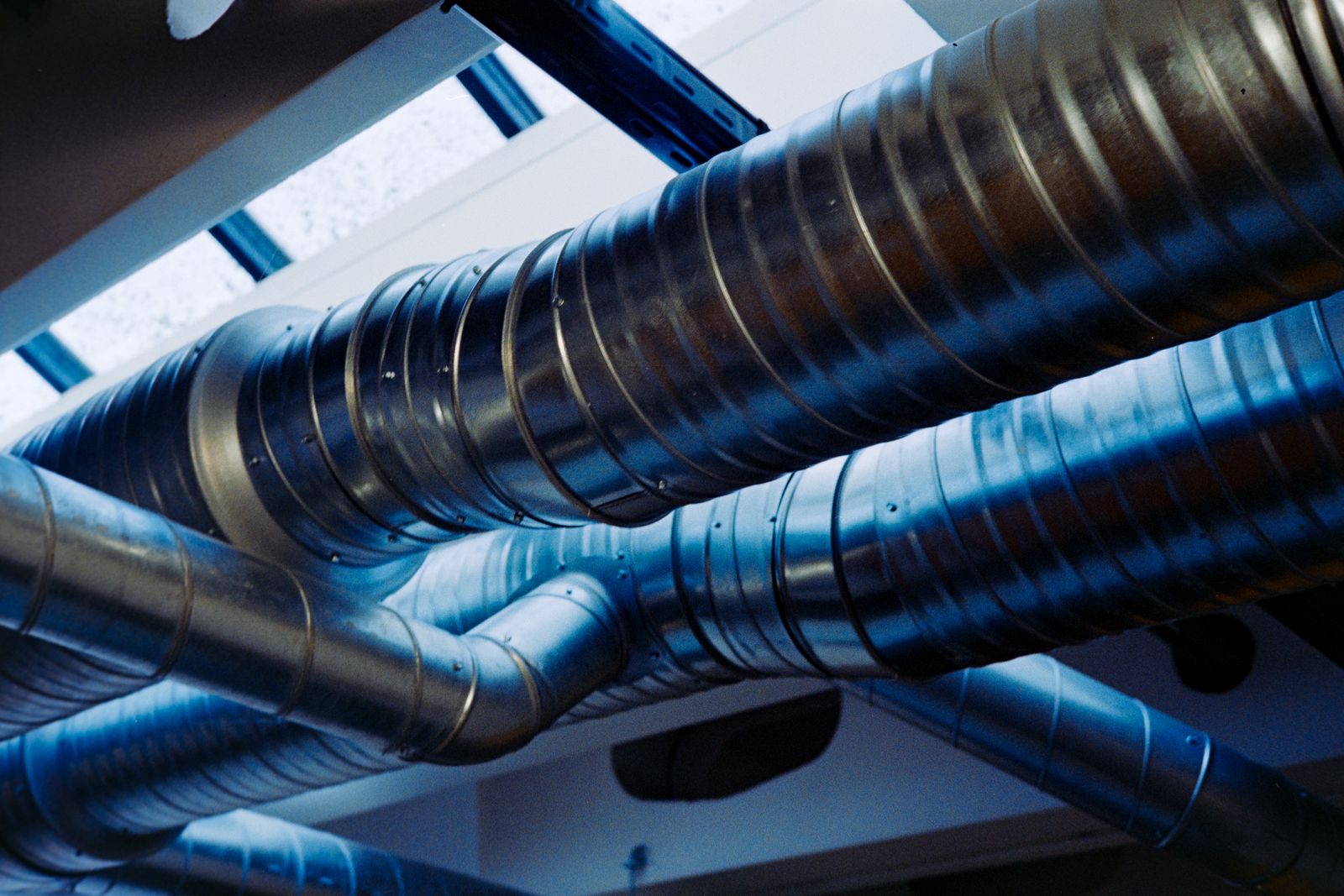
Our commercial TAB services cover the full air and water side of an HVAC system — independently measured against design, documented under ASHRAE 111 and the NEBB and AABC procedural standards, and delivered as a stamped report owners, engineers, and AHJs can act on.
Services we deliver
- Commercial air balancing — measured airflow at every diffuser, return, exhaust, and VAV terminal box, against the engineer’s design CFM
- Hydronic water balancing — measured flow at every coil, circuit setter, and pump, against design GPM and delta-T
- HVAC commissioning and retro-commissioning — full sequence verification under ASHRAE Guideline 0
- Duct leakage testing (DALT) — pressurized leakage testing under SMACNA classes
- Indoor air quality testing — CO2, VOC, particulate, RH, and temperature measurement under ASHRAE 62.1 ventilation criteria
- Sound and vibration testing — NC/RC and accelerometer-based vibration measurement at occupied spaces
- Stairwell pressurization testing — life-safety verification under NFPA 92 and IBC 909
Who we work with
Our typical clients are commercial property owners and developers, mechanical contractors who need an independent third-party TAB agent for closeout, and property management firms running comfort or energy issues on occupied buildings. Project sizes range from single-zone tenant build-outs to multi-floor office towers, hospitals, and educational campuses.
How we engage
Every engagement opens with a kickoff call, drawing review, and a scope-and-schedule confirmation. From there we mobilize after mechanical start-up, run the procedural standard, and ship the stamped report before final inspection. Send the mechanical drawings and a schedule outline and you will hear back within one business day with a fixed-price proposal.
What our TAB services cover
First, our TAB services cover every device on the commercial HVAC system — diffusers, return grilles, VAV boxes, coils, pumps, and fans. Specifically, air-side TAB services follow ASHRAE 111; water-side TAB services cover chilled-water, hot-water, and condenser loops; specialty TAB services cover stairwell pressurization, duct leakage, sound and vibration, and IAQ.
When projects need TAB services
Then, most commercial closeouts in metro Atlanta require TAB services for the CofO. Furthermore, retrofits, tenant build-outs, and chronic-comfort complaints all trigger discrete TAB services independent of new construction. Therefore, the smart owner ties TAB services mobilization to mechanical substantial-complete on the schedule.
How our TAB services are delivered
Additionally, every TAB services engagement opens with a drawing review and closes with a stamped report delivered to the owner’s rep with copies to the engineer and mechanical contractor. Specifically, the report follows the spec — ASHRAE 111 with NEBB or AABC certification stamp as required.
Our commercial TAB services follow ASHRAE Standard 111
Specifically, every engagement of our commercial TAB services follows ASHRAE 111 procedural rigor — instrument calibration, measurement protocols, and report format. Furthermore, our TAB services hold NEBB or AABC certification as the spec requires. Therefore, owners and engineers receive a document the AHJ accepts at face value across the metro and all of Georgia.
Industries our TAB services support
First, our TAB services support Class A and B office, healthcare and life sciences, education, hospitality, industrial, retail, multi-family, and government. Furthermore, each vertical brings its own AHJ expectations and certifying-body preferences. Therefore, our TAB services flex by sector — federal projects under NEBB, private commercial typically under AABC or NEBB, and recurring property-management contracts under whichever the asset originally specified.
Talk to us
Send the mechanical drawings and a schedule outline and you will hear back within one business day with a fixed-price proposal.
Not sure which service you actually need?
Most owners come to us with a symptom, not a service. Here’s how the symptom usually maps to the work:
Tenant complaints about hot or cold rooms. That’s air balancing. Sometimes water balancing if the chilled or hot water side is off. We start with airflow because it’s the most common culprit and the easier read.
Stuffy air, headaches, kids falling asleep in classrooms. Could be a ventilation problem (not enough outdoor air making it to the space), a balance problem (the OA you have isn’t getting where it should), or an actual IAQ issue (something in the air that shouldn’t be). The way to find out is air balancing first, then IAQ testing if the airflow is right but the symptoms aren’t gone.
Energy bills creeping up without an obvious reason. Often a balance drift — equipment running longer than it should because zones are starved or over-supplied. Sometimes it’s controls, which is a commissioning problem more than a balancing one. We can tell pretty quickly which it is.
The building is new and you need closeout documentation. That’s straight TAB. The mechanical engineer specified it, the GC is on the hook for it, and you need a clean report to get the certificate of occupancy. We’re used to that timeline.
The building is old and tired and you need to know what’s wrong. That’s retro-commissioning. We measure everything, write up what’s drifted from design, and give you a punch list ranked by ROI. Owners usually save the cost of the engagement inside a year.
How these services fit together on a real project
On new construction, the order’s pretty standard. Duct leakage testing happens first because there’s no point balancing a system that leaks. Then air balancing. Then water balancing if the building has hydronics. Commissioning runs in parallel with all of it and ties everything to the design intent.
On an existing building it’s the reverse problem — you don’t know what’s wrong yet. We typically start with a walk-through and a quick scan of the BAS to see where the system thinks it is. Then we measure where it actually is. The gap between those two numbers is usually the most useful thing we hand the owner.
What you’ll actually get on a typical project
A signed, sealed TAB report with every reading on every diffuser, register, terminal, and air handler. A summary section that flags where things drifted from design and how much we had to adjust to get them back. A page on the front explaining what’s in the report in language an owner can read without an engineering degree.
If the report identifies issues we can’t fix without additional work (a damper missing, a coil that’s fouled, a fan motor that’s smaller than the design called for), we tell you. We don’t quote the repair — we don’t do installation — but we’ll point you at the right kind of contractor.
Timing — what to plan for
Small office or retail: usually one to two days on site, plus reporting.
Mid-size office building, school, or medical office: two to four days, sometimes split across nights if the building needs to stay operational.
Hospital, lab, data center, or large multifamily: a week or more. We staff up for these. Hospitals especially — there’s a lot of paperwork, every space gets measured, and we coordinate with infection control and clinical staff.
Reports go out within five business days of the last reading on site, usually less. If the GC has a hard closeout date, we work to it.
Open page & standards
Helpful articles
- What is HVAC testing, adjusting & balancing?
- A GC’s guide to scheduling test & balance
- NEBB vs. AABC vs. TABB: certifications explained
- What a TAB report includes
Industry standards & references
- AABC — Associated Air Balance Council
- NEBB — National Environmental Balancing Bureau
- ASHRAE Standards & Guidelines
- SMACNA — Sheet Metal & Air Conditioning Contractors
Explore: Cities & regions we serve · Industries we serve