
HVAC commissioning verifies that every sequence, sensor, damper, and valve in a building’s mechanical system operates the way the design intended. We perform commissioning and retro-commissioning under ASHRAE Guideline 0 as an independent third-party agent, with no tie to the mechanical contractor, controls integrator, or equipment manufacturer.
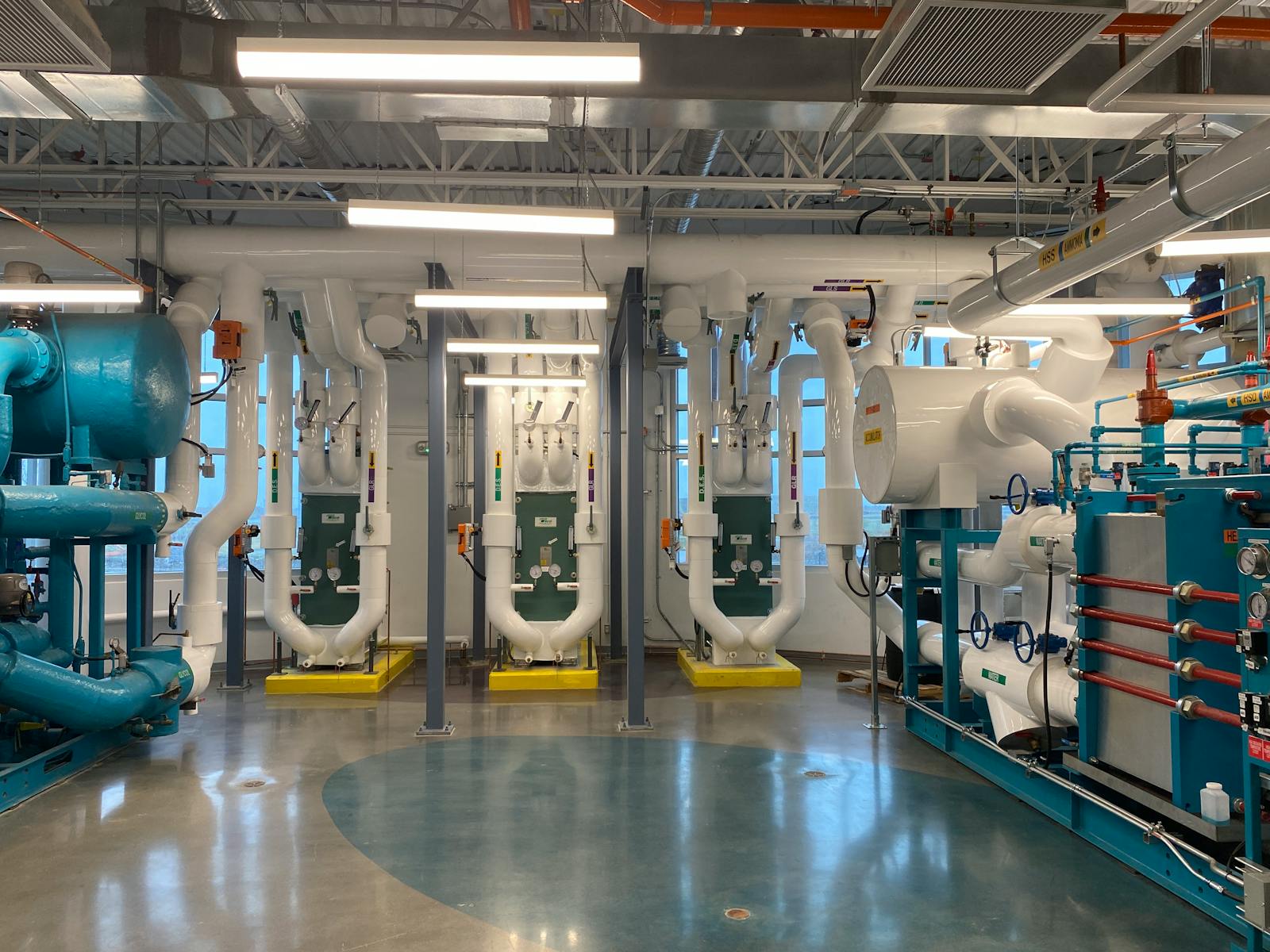
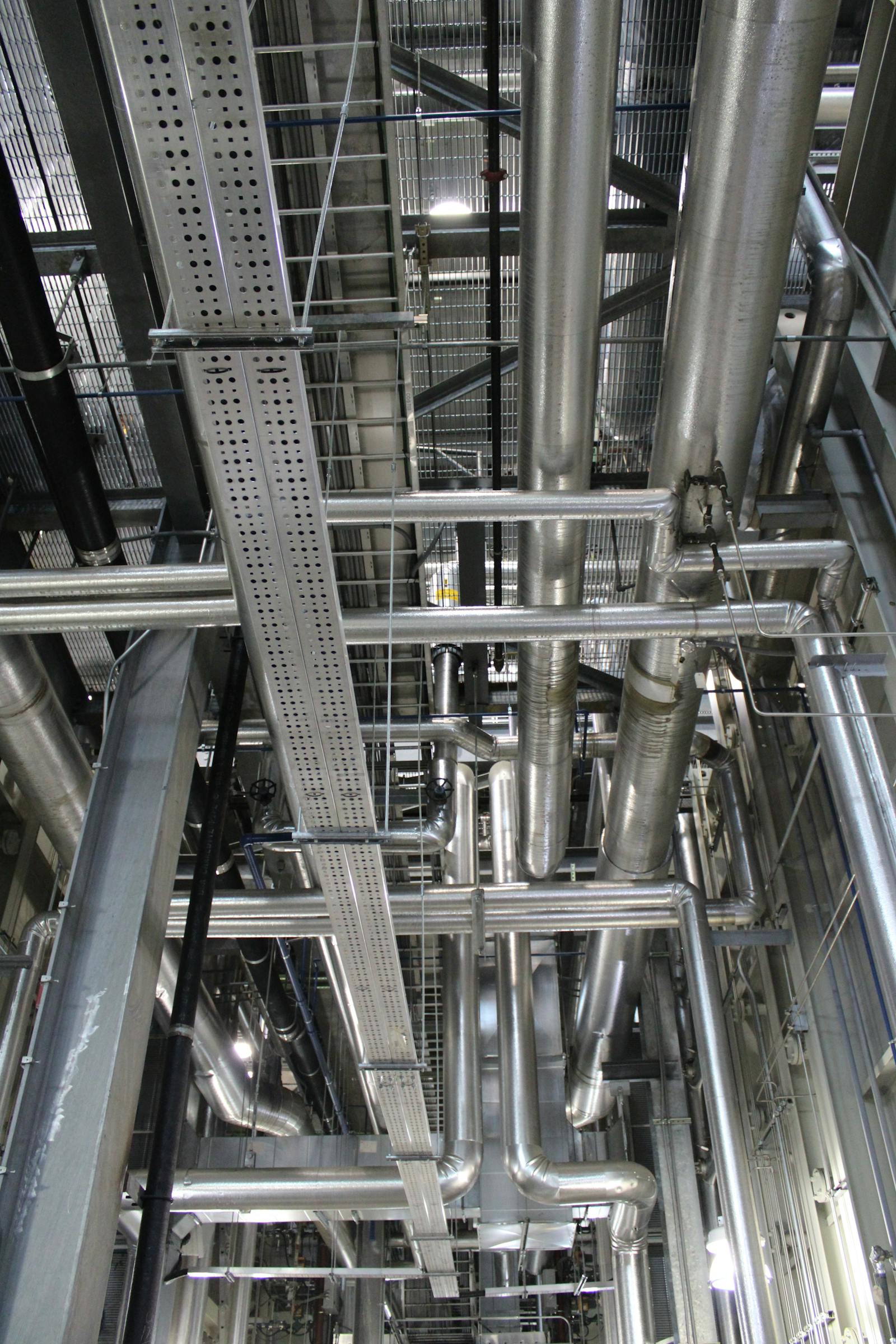
What HVAC commissioning verifies
- Pre-functional checks on every piece of HVAC equipment
- Functional performance testing against the sequence of operations
- Sensor calibration — temperature, pressure, flow, CO2, OA
- Integrated system testing including economizer, IAQ, and life-safety modes
- BAS command verification at the controller level
- Warranty-year follow-up reviews where the OPR requires
New construction vs retro-commissioning
New-construction commissioning runs in parallel with design and construction phases — we review the OPR, issue commissioning specifications, observe construction, and run functional tests. Retro-commissioning starts with an existing-building investigation, identifies sequence drift and component failures, and delivers a corrective action scope ranked by ROI.
HVAC commissioning deliverable
Full commissioning report including master issues log, functional test results, sensor calibration data, sequence-of-operations verification, BAS screenshots, and warranty-year follow-up plan. ASHRAE Guideline 0, LEED EA Cx, and most municipal commissioning ordinances accept the format.
When HVAC commissioning belongs on the schedule
First, HVAC commissioning belongs on every new-construction closeout with ASHRAE 90.1 or LEED scope. Then, retro-commissioning of existing buildings is the right HVAC commissioning approach when the building has drifted from design. Furthermore, recurring HVAC commissioning on healthcare and lab assets keeps critical systems compliant year over year. Therefore, every owner’s mechanical PM plan should name an HVAC commissioning agent of record.
ASHRAE and certification context
ASHRAE Guideline 0 governs the commissioning process for new buildings. ASHRAE Guideline 1.1 covers occupant-related criteria. ASHRAE Standard 202 establishes the framework for measurement and verification. LEED v4 and v4.1 reference these guidelines as the basis for the Enhanced Commissioning credit. WELL Building Standard adds occupant-comfort verification. Federal projects (GSA, VA, USACE) frequently require third-party certification. Each layer of standards adds documentation but also adds value — owners receive a building that demonstrably matches design, with a verification trail that supports refinance, sale, and certification renewal years downstream.
Talk to us
Send the mechanical drawings and a schedule outline and you will hear back within one business day with a fixed-price proposal.
Request a proposal Call 800-883-6040
Related resources
Related services
- Commercial air balancing — a prerequisite to functional testing
- Duct leakage testing — verifies envelope tightness for Cx
- IAQ testing — confirms outcomes of ventilation design
Further reading
- HVAC commissioning vs. test & balance
- Retro-commissioning existing buildings
- A GC’s guide to scheduling test & balance
Industry standards & references
- ASHRAE Guideline 0 — The Commissioning Process
- BCxA — Building Commissioning Association
- USGBC — LEED commissioning credits